
How Agroforestry Supports Sustainable Land Use
Agroforestry is a land management system that combines trees and shrubs with crops or livestock on the same plot of land. This practice has been gaining attention worldwide for its ability to promote sustainable land use. By integrating trees into agricultural landscapes, agroforestry offers numerous environmental, economic, and social benefits. This article explores how agroforestry supports sustainable land use through practical examples, detailed explanations, and actionable recommendations.
The Role of Agroforestry in Sustainable Land Management
Sustainable land use means managing land resources to meet current needs without compromising the ability of future generations to meet theirs. Agroforestry contributes to this goal by enhancing soil health, conserving water, and increasing biodiversity.
Soil Health Improvement: Trees in agroforestry systems help prevent soil erosion by stabilizing the soil with their roots. They also contribute organic matter through leaf litter, which improves soil fertility and structure.
Water Conservation: Tree canopies reduce surface runoff and increase water infiltration into the soil. This helps maintain groundwater levels and reduces the risk of drought.
Biodiversity Enhancement: Agroforestry creates diverse habitats for wildlife, including beneficial insects and birds that can control pests naturally.
For example, in tropical regions, farmers often plant nitrogen-fixing trees alongside crops like maize or beans. These trees enrich the soil with nitrogen, reducing the need for synthetic fertilizers and promoting healthier crop growth.
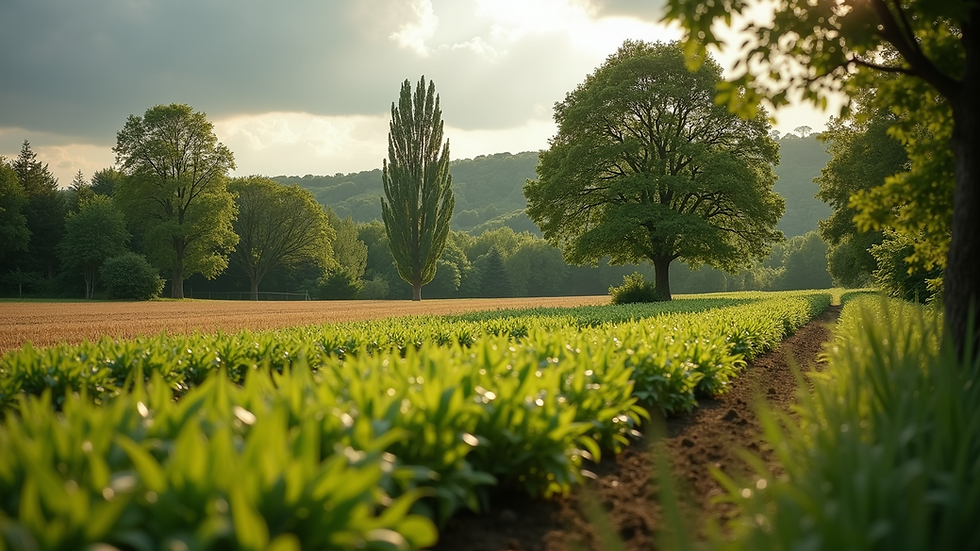
Sustainable Land Use Practices Through Agroforestry
Implementing agroforestry requires understanding the local environment and selecting appropriate tree and crop species. Here are some sustainable land use practices that can be adopted:
Alley Cropping: Planting rows of trees with crops grown in the alleys between them. This method maximizes land use and provides shade, which can reduce crop water needs.
Silvopasture: Integrating trees with pastureland where livestock graze. Trees provide shade and shelter for animals, improving their welfare and productivity.
Forest Farming: Cultivating high-value crops like mushrooms or medicinal plants under a managed forest canopy.
Windbreaks and Shelterbelts: Planting trees in rows to protect crops and soil from wind erosion.
These practices not only improve land productivity but also increase resilience to climate change by creating microclimates and reducing vulnerability to extreme weather.

Economic and Social Benefits of Agroforestry
Agroforestry systems can diversify income sources for farmers, making rural livelihoods more stable and sustainable. Trees provide timber, fruits, nuts, and other products that can be sold or used at home. This diversification reduces dependence on a single crop and spreads financial risk.
Increased Income: Farmers can harvest multiple products from the same land, such as coffee grown under shade trees or fruit trees intercropped with vegetables.
Job Creation: Agroforestry can create employment opportunities in tree planting, maintenance, and product processing.
Community Well-being: Trees improve the local environment by providing shade, improving air quality, and enhancing the aesthetic value of the landscape.
For instance, in parts of Africa, agroforestry has helped smallholder farmers increase their income by selling fruits and nuts while maintaining crop production. This approach also supports food security by providing diverse food sources.

Practical Steps to Implement Agroforestry for Sustainable Land Use
Farmers and land managers interested in adopting agroforestry can follow these practical steps:
Assess the Land: Understand soil type, climate, and existing vegetation to select suitable tree and crop species.
Plan the Layout: Design the arrangement of trees and crops to optimize sunlight, water use, and space.
Select Species: Choose native or well-adapted trees that provide multiple benefits such as nitrogen fixation, fruit production, or timber.
Start Small: Begin with a pilot plot to test the system and learn from experience before scaling up.
Monitor and Adapt: Regularly check tree and crop health, soil conditions, and pest presence. Adjust management practices as needed.
Support from agricultural extension services, NGOs, or government programs can provide valuable training and resources. Additionally, understanding the agroforestry impact through case studies and research can guide better decision-making.
Future Perspectives on Agroforestry and Sustainable Land Use
As global challenges like climate change and land degradation intensify, agroforestry offers a promising pathway to sustainable land use. Innovations in agroforestry design, such as integrating technology for monitoring and precision planting, can enhance its effectiveness.
Climate Mitigation: Trees sequester carbon, helping reduce greenhouse gas emissions.
Resilience Building: Diverse agroforestry systems are more resilient to pests, diseases, and extreme weather.
Policy Support: Governments can promote agroforestry through incentives, land tenure security, and research funding.
By embracing agroforestry, communities can protect natural resources, improve livelihoods, and contribute to a healthier planet.
Agroforestry is more than just planting trees on farms - it is a holistic approach to land use that balances productivity with environmental stewardship. Whether you are a farmer, land manager, or policymaker, understanding and applying agroforestry principles can lead to more sustainable and resilient landscapes.

Comments